 |
|
| crabs text index | photo index |
| Phylum Arthropoda > Subphylum Crustacea > Class Malacostraca > Order Decapoda > Brachyurans > Family Varunidae |
| Paddler
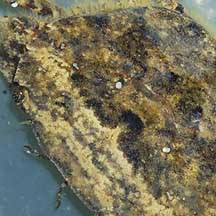
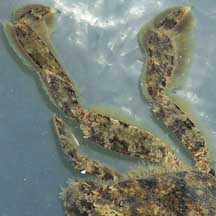
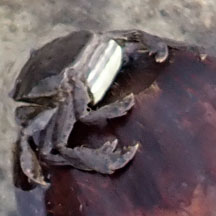
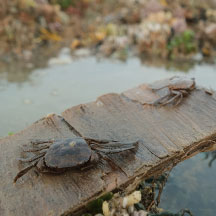
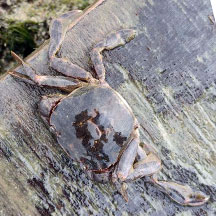
crab Varuna sp. Family Varunidae updated Dec 2019 Where seen? This crab with paddling legs is sometimes seen on our shores near mangroves and freshwater streams. It is usually seen drifting on flotsam or seaweed. This particular one was seen on top of a large piece of plastic. Features: Body width 3-5cm. It has a squarish body and flat legs. The last two pairs of legs are paddle shaped and fringed with hairs. These allow the crab to paddle for short distances. It is actually a freshwater crab but adults return to the sea to hatch their eggs. What does it eat? It is a scavenger. Human uses: In many parts of Southeast Asia, these little crabs are harvested as food. The females with eggs are particularly relished. |
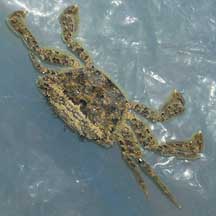 Changi Jun 07 |
 |
 |
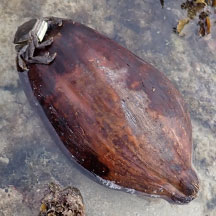 Clinging onto a floating coconut. Beting Bemban Besar, May 24 |
 |
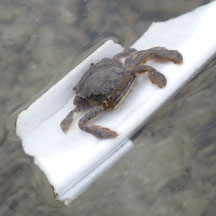 Clinging onto floating trash. Beting Bemban Besar, May 24 |
| Paddler crabs on Singapore shores |
On wildsingapore
flickr
|
| Other sightings on Singapore shores |
Links
|