|
|
|
|
|
|
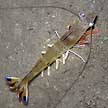
| 5-8cm.
Body beige with spots on the sides and blue marks on the tip of
the tail. Sandy, silty, seagrass areas. Sometimes seen on some of
our shores. |
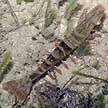
5-8cm.
Distinct banding on the body with red appendages. Sandy, silty, seagrass
areas. Commonly seen on many of our shores. |
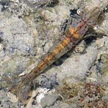
5-8cm.
Body speckled with small spots and faint banding. Sandy areas near
reefs. Sometimes seen on some of our shores. |
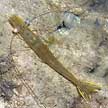
5-8cm.
Slender body usually plain sometimes with faint banding. Sandy areas.
Sometimes seen on some of our shores. |
|
|
|
|
|
|
|
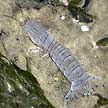
| 6-10cm.
Body long, broad, plain with faint dark bars and lines. Broad tail.
Large pincers with spines. Among seagrasses. Commonly seen on some
of our Northern shores. |
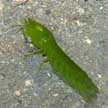
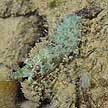
5-7cm.
Body long, cylindrical, plain green with narrow tail. Large pincers
modified into clubs. Near reefs and among seagrasses. Sometimes
seen on our Southern shores. |
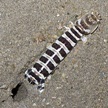
5-7cm.
Body long, cylindrical, with broad dark bands. Large pincers with
spines. Rarely seen. |
|
4-5cm.
Fat, short with a humped back. Sometimes 'hairy' front limbs. On coral
and rubble near reefs. Sometimes seen on some of our shores. |
|
|
|
|
|
|
| 4-6cm.
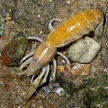
Pale, white or yellowish. Pincers usually of equal size. Mangroves,
seagrass meadows. Sometimes seen on our Northern shores. |
4-6cm.
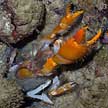
Large bright orange pincers, one usually bigger than the other. Entire
animal rarely seen. Lives in smooth sided burrows about 2cm wide.
Coral rubble. Burrows commonly seen on many of our Southern shores.
|
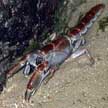
Up
to 30cm. Rarely seen above ground but their huge mud mounds (up to
2m high) are commonly seen in our back mangroves. |
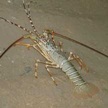
25-30cm,
up to 50cm. With two pairs of very long thick antennae. May be colourful.
Reefs, rocky areas in deep water, artificial seawalls and jettys. |
|