 |
|
| plants text index | photo index |
| mangroves |
| Kalak
kambing Finlaysonia obovata Family Apocynaceae updated Jan 2013 Where seen? This climber with distinctive horn-like fruits is rarely seen. According to Hsuan Keng, it is found in mangroves and tidal river banks including at Kranji and Geylang. Ang et al have found it in some of our remaining mangroves. Generally uncommon in global distribution, but where they occur, they can be common. Usually found in mangroves and on borders of tidal creeks and fishponds. Features: A slender, woody climber up to 5m long. Scrambling and draping over mangrove trees. Bark pale, warty and papery. A white latex oozes out of all broken plant parts. Leaves spoon-shaped with tiny pointed tip (5-10cm) fleshy glossy green, arranged opposite one another. Flowers small (about 1cm) with thick petals which are fuzzy and hairy on the inside, arranged in a branched inflorescence. According to Giesen, the flowers have a noxious smell. According to Ang et al, it is believed to be pollinated by flies and beetles that are attracted to rotting carcasses. In Java it flowers comparatively rarely. Fruits are cresent-shaped pods (8-10cm) fleshy ribbed in a pair, described as resembling the horns of a buffalo. Each fruit contains many brown flat seeds. Human uses: According to Burkill, the leaves are eaten in salads in the Moluccas, but "apparently this use does not extend to Malaya". According to Ang et al, this plant was recently found to contain substances that have antibacterial properties against fish diseases. Status and threats: This climber is listed as 'Critically Endangered' on the Red List of threatened plants of Singapore. This is because it is estimated that there are fewer than 50 mature individuals left in the wild with some evidence of decline and fragmentation of its natural habitat. |
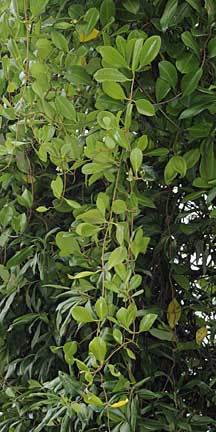 Kranji Canal, Mar 09 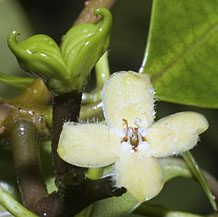 Mandai, Dec 12 |
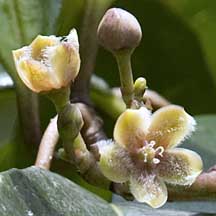 Mandai, Mar 11 |
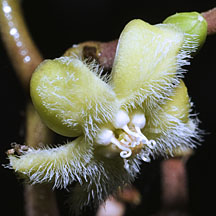 Mandai, Dec 12 |
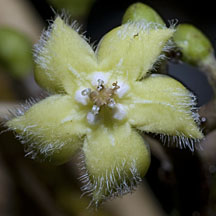 Mandai, Dec 12 |
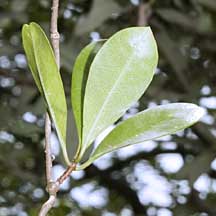 Mandai, May 11 |
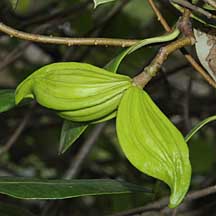 Kranji Canal, Mar 09 |
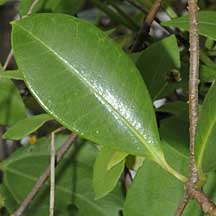 Kranji Canal, Mar 09 |
| Kalak kambing on Singapore shores |
| Photos of Kalak kambing for free download from wildsingapore flickr |
| Distribution in Singapore on this wildsingapore flickr map |
|
Links
References
|
|
|